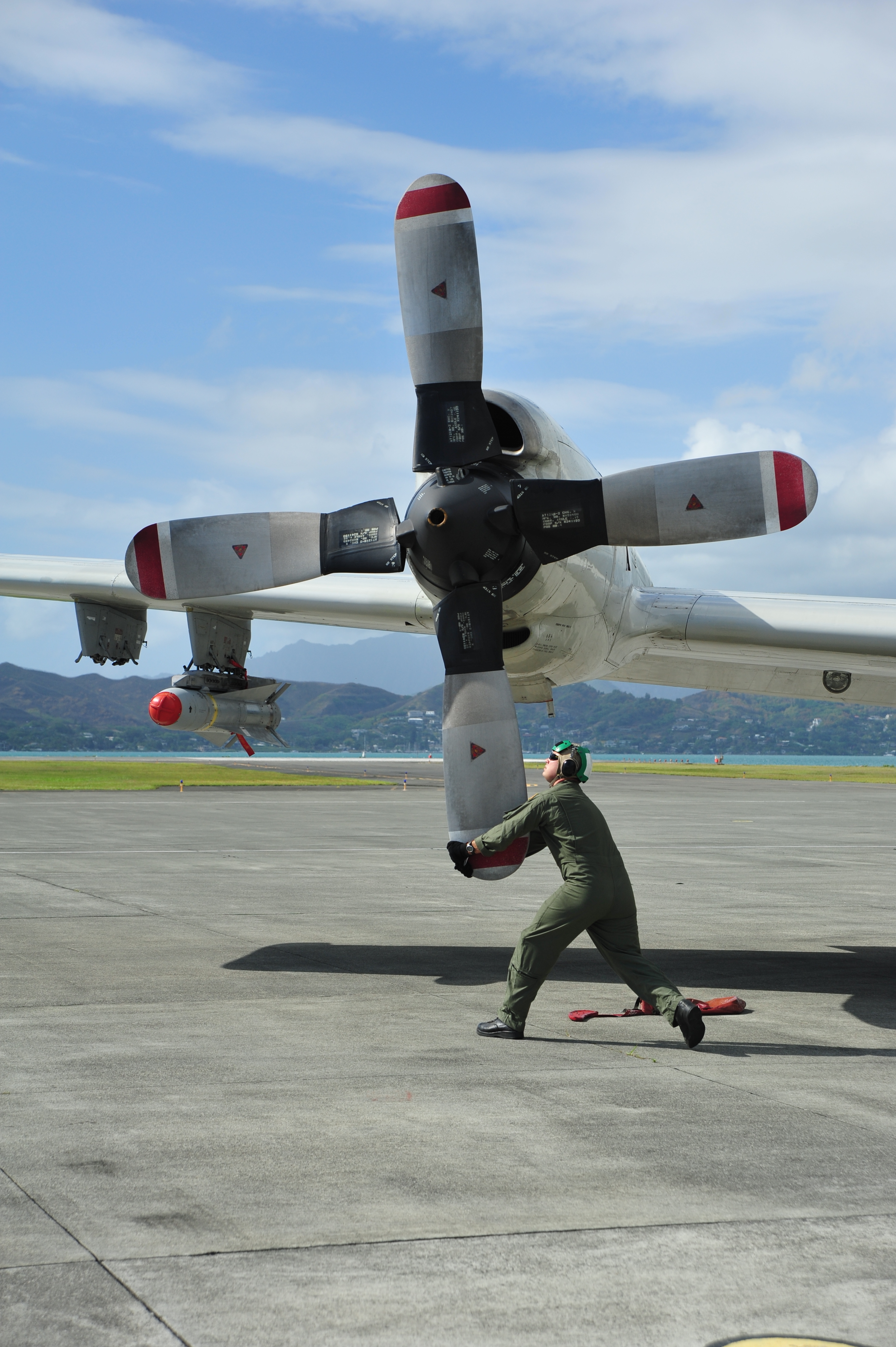
No permanent VP presence at MCB Kaneohe Bay with P-8A?

Navy Publishes Notice of Intent to Prepare Supplemental EIS for P-8 Basing
Story Number: NNS121114-10
11/14/2012

From Commander, U.S. Fleet Forces Public Affairs

NORFOLK, Va. (NNS) — A Notice of Intent (NOI) will be published in the Federal Register Nov. 15 announcing the Navy’s intent to prepare a Supplemental Environmental Impact Statement (EIS) for the introduction of the P-8A Multi-Mission Maritime Aircraft (MMA) to the U.S. Navy Fleet.

The Supplemental EIS will address the potential environmental impacts of new home basing alternatives and updated P-8A MMA program information.

In September 2008, the Navy completed the Final EIS for the Introduction of the P-8A into the U.S. Navy Fleet, which evaluated the environmental impacts of home basing 12 P-8A MMA fleet squadrons (72 aircraft) and one Fleet Replacement Squadron (FRS) (12 aircraft) at established maritime patrol home bases. On Jan. 2, 2009, a Record of Decision (ROD) was issued that called for basing five fleet squadrons and the FRS at Naval Air Station (NAS) Jacksonville, four fleet squadrons at NAS Whidbey Island, and three fleet squadrons at Marine Corps Base (MCB) Hawaii Kaneohe Bay, with periodic squadron detachments at NAS North Island (Alternative 5).

To meet the Navy’s current and future requirements and maximize the efficiency of support facilities, simulation training equipment, and on-site support personnel, the Navy now proposes to analyze additional alternatives for P-8A aircraft home basing. The Navy has determined that a dual-siting alternative, rather than home basing the aircraft at three locations, may best meet current requirements. The two potential home base locations for the P-8A MMA are NAS Jacksonville and NAS Whidbey Island.

Home basing at two locations would result in an increase in aircraft and personnel at NAS Jacksonville and NAS Whidbey Island compared to the 2008 ROD. There is no new facility requirement for additional aircraft at NAS Jacksonville. Additional aircraft at NAS Whidbey Island would result in an expanded facility footprint. Under a dual-siting alternative, a presence in Hawaii would be maintained with a continuous presence of two aircraft filled by rotating detachments at MCB Hawaii Kaneohe Bay. The two-aircraft detachment would result in fewer personnel and a reduced facility footprint at MCB Hawaii Kaneohe Bay when compared to the 2008 ROD. There would be no change to the periodic squadron detachment operations at NAS North Island, as described in the 2008 ROD.

No decision has been made to change the 2008 Record of decision. When the Supplemental EIS is complete, the SECNAV can decide to homebase at two locations, or to continue implementing homebasing at three locations in light of the updated information.

During the 45-day public comment and agency review period following release of the Draft Supplemental EIS, anticipated in the summer of 2013, the Navy will schedule public meetings to discuss the findings of the Draft Supplemental EIS and to receive public comments.

The public meetings will be held near each of the home basing locations. Dates, locations, and times for the public meetings will be announced in the Federal Register and local media at the appropriate time.

The Navy has established a public web site for the Supplemental EIS: [www.mmaseis.com<http://www.mmaseis.com/>]. This public web site includes up-to-date information on the project and schedule, as well as related documents associated with the Supplemental EIS and 2008 Final EIS. To be included on the Navy’s mailing list for the Supplemental EIS (or to receive a copy of the Draft Supplemental EIS), interested individuals may submit an electronic request through the project web site under “mailing list” or a written request to: P-8A MMA EIS Project Manager (Code EV21/CZ); Naval Facilities Engineering Command (NAVFAC) Atlantic, 6506 Hampton Blvd, Norfolk, VA 23508.

[Non-text portions of this message have been removed]

AOC Albert A. Castro USN (Ret) VP-4 1971-76

Albert Atanacio Castro, 62, AOC USN Retired departed our midst on 13 October 2012, after suffering a fall while hunting near his home in La Plata, MD. His wife Patricia of 28 years, devoted dog Rocky and other family survive him. Albert was born in Gallup, NM, to Atanacio and Lola Castro. He graduated from Rio Grande High School in Albuquerque, NM, and joined the United States Navy in August 1968.

Chief Castro had a distinguished 23-year Naval career. His first operational tour was with VP-4 Skinny Dragons, Barbers Point, HI from 1971 – 1976. Al logged over 500 hours of dedicated combat missions including many searches and refugee operations. Additional Duty Stations included: NAS North Island, San Diego, CA, VP-19 Big Red at NAS Moffett Field, CA, Naval Air Development Center (NADC), Warminster, PA, Oceanographic Development Squadron VXN-8 and Naval Aviation Maintenance Office (NAMO) at NAS Patuxent River, MD. Chief Castro’s awards and decorations include two Strike Flight Air Medals, Navy Achievement, Navy Expeditionary, Armed Forces Expeditionary, two Vietnam Service Medals, and numerous other citations and commendations.

Typical of his devotion to duty, Chief Castro took great pride in his civilian career. He proudly continued to serve the Navy and his country as a DOD contractor supporting Air-to-Air Weapons for Aviation Trainings Systems Command. In 2008 he became Program Manager for Acquisition and Life Cycle Support of the HARM Weapons System for the Naval Air Weapons Center at Patuxent River, MD. Chief Castro was a patriot, an unsung hero, always prepared to serve the Navy and the United States of America. Recently, he and his teammates were on board several naval vessels upgrading equipment as his comrades ventured into harm’s way. Chief Castro’s awards and decorations include two Strike Flight Air Medals, Navy Achievement, Navy Expeditionary, Armed Forces Expeditionary, two Vietnam Service Medals, and numerous other citations and commendations.

He was a life member of the Association of Aviation Ordinancemen, Plankowner of Chapter 22, Patuxent River, and also served on the AAO National Board of Directors. In addition he was a proud member of the Veterans of Foreign Wars, prior Post 2632 Senior Vice Commander; the Military Order of the Cooties; the Fleet Reserve Association Branch 093; American Legion; VP-4 Association; the NRA; and the Saint Charles Sportsman’s Club.

Albert is also survived by his brothers Frank Castro of Paige TX, Anthony Castro and Timothy Castro of Albuquerque, NM and sisters Josephine Martinez of Clearfield UT, Marie Baca of Fort Worth TX, Florence Otis, Elizabeth Sumruld, and Dolores Torres of Albuquerque NM, and Kathy Martin of Dalles OR, and many nieces and nephews.

Family and friends will be received to celebrate Albert’s Life on Thursday, October 18, 2012 from 4 PM to 7 PM at Brinsfield-Echols Funeral Home, P.A., 30195 Three Notch Road, Charlotte Hall, MD 20622. There will be a funeral service on Thursday, October 18, 2012 at 6:30 PM. Deacon Johnny Barnes will officiate. Interment will be held at a later date at Arlington National Cemetery in Arlington, VA.

In lieu of flowers, please send donations to the VFW National Home for Children, 3573 South Waverly Road, Eaton Rapids, Michigan 48827-9799 or www.vfwnationalhome.org. The VFW National Home for children provides support for our military and veterans’ families.

A Guest Book is available at http://www.brinsfieldecholsfuneral.com/obituaries/dsp_files/dsp_viewobit.cfm?obit_ID=4635

Gallery

VP-4 Bird in front of Mt Fuji

This gallery contains 1 photos.

Click on the image to view the highest Resolution Or, right-click on this link: http://www.vp4association.com/wp-content/uploads/2012/10/0465013.jpg and select save as….

‘War Eagles’ take P-8A on first detachment | Jax Air News

‘War Eagles’ take P-8A on first detachment | Jax Air News.

Posted: September 26, 2012 – 5:26pm
Members of the VP-16 "War Eagles" gather in front of a new P-8A Poseidon aircraft currently being built at The Boeing Company in Renton, Wash. Sept. 14. The group travelled to Washington to tour Boeing facilities and to learn more about the new aircraft the squadron is flying.

Photo courtesy of VP-16
Members of the VP-16 “War Eagles” gather in front of a new P-8A Poseidon aircraft currently being built at The Boeing Company in Renton, Wash. Sept. 14. The group travelled to Washington to tour Boeing facilities and to learn more about the new aircraft the squadron is flying.

Lt. j.g. Nikee Giampietro
VP-16

The newest addition to the Maritime Patrol and Reconnaissance community, the P-8A Poseidon, took flight for its very first detachment by a fleet squadron during a visit to the Boeing facilities in Seattle, Wash. Sept. 14.
VP-16 sent 21 aircrew, maintenance and support personnel on this momentous occasion. The “War Eagles” have been busy training since July, learning how to operate and maintain the P-8A. This detachment gave the squadron a unique opportunity to see the aircraft from the beginning stages of production to testing the newest improvements to mission equipment that will be incorporated in future upgrades.
The War Eagles started at Boeing’s Weapon System Integration Lab, known as the WSIL. The lab represents the brainpower of the P-8A mission systems. It contains a mock replica of the Poseidon interior and was the first place Patrol and Reconnaissance Wing Eleven and VP-30 instructors trained before NAS Jacksonville’s Integrated Training Center was complete.
At the WSIL, Boeing employees, including many former P-3C aircrew, work on current and future P-8A technologies. Their prior military experience gives them unique insight into how aircrew operators work and think.
Their mission is to continuously test the P-8A software and systems, looking for any malfunctions that need to be corrected. They also focus on new features that make the system more intuitive to the operators, allowing the mission to be completed as efficiently as possible.
The aircrew were excited to see all of the new updates the aircraft will soon receive as well as the exposure to the “behind-the-scenes” of how the mission systems are designed.
The maintenance and support personnel were eager to fly the simulator as well as get some hands-on experience and learn what their fellow “War Eagles” do operationally.
PS3 Cori Shea said, “It’s interesting to see how much effort goes into how the airplanes are designed. There’s so much more to the process than I ever imagined.”
After seeing the future of the P-8A, the VP-16 personnel headed to Renton, Wash. to see where every 737 and P-8A begins – the Boeing production lines. Boeing representatives Carl Lang, David Robinson, and James Detwiler led an eye-opening tour throughout the facilities. Lang first showed the main production line where all of Boeing’s 737 commercial aircraft are assembled and painted before being sent out for final testing. The tour then moved over to the P-8A line to show the similarities and differences in the process.
For many personnel, the most exciting part of this tour was being able to see the aircraft in various states of assembly, knowing that they are the first aircraft VP-16 will proudly fly during their first operational deployment with the P-8A.
The tour concluded at the Boeing Military Facility, where the aircraft is sent to have all of the mission equipment installed after it is fully assembled.
Lt. Ryan Burke said, “Seeing the aircraft in this state was a good learning tool for the aircrew. It gave us the chance to see how things are connected and flow together, which gives us a better understanding of how to operate the equipment.”
The information learned on this tour gave VP-16 an appreciation for all of the hard work that has been put into the aircraft design, production and mission system integration. Although it was a short detachment, the Sailors and officers of VP-16 view it as a sign of great things to come for squadron. VP-16 is scheduled to complete their transition to the P-8A by the end of the year and will commence pre-deployment training in January.


Read more at Jacksonville.com: http://jaxairnews.jacksonville.com/military/jax-air-news/2012-09-26/story/war-eagles-take-p-8a-first-detachment#ixzz27iSWIwx8

Leave No One Behind | House Committee on Veterans Affairs

WASHINGTON, D.C.—Today, Rep. Jeff Miller, Chairman of the House Committee on Veterans’ Affairs, issued the following statement in recognition of National POW/MIA Recognition Day:“On the third Friday of every September we pay tribute to the lives and contributions of the more than 83,000 Americans who are still listed as Prisoners of War or Missing in Action. ‘Leave no one behind’ is a familiar refrain which echoes throughout the ranks of our Armed Forces. This motto is also what propels the men and women of Joint POW/MIA Accounting Command JPAC, who devote their lives to finding the remains of those unaccounted for in foreign lands.“While JPAC’s task is challenging, their cause is worthy. Those who never made it home hold a special place in our hearts, and it is the responsibility of the living to give them a proper resting place here at home on American soil.“This past July, the remains of Lt. Col. Clarence F. Blanton of the U.S. Air Force, who was lost on March 11, 1968, in Houaphan Province, Laos, were recovered. Lt. Col. Blanton is a symbol for all those who are missing. No matter how much time elapses—in his case 42 years—no cause is lost.“We are committed to finding all 83,000 POW/MIA and bringing them back to the home they sacrificed so much to defend, and to give their families an answer.”

via Leave No One Behind | House Committee on Veterans Affairs.

Hylan B. Lyon Jr. VP-4 1967 – 1969

While serving in VP-4 from 1967 -1969, Hylan B. Lyon Jr. was a LCDR, PPC on Crew 6 and was the Operations Officer.


DR. HYLAN BENTON LYON, JR. Loving Son, Father, Husband, Grandfather, Uncle, Cousin, Trusted Friend and, War Veteran. Dr. Hylan Benton Lyon Jr. died suddenly on the day of his 74th birthday July 20, 2010. He is survived by wife, Sandra Starr Lyon her sons Kenneth and Christopher Starr and his wife Rebecca; sons, Matthew Lyon and his wife Jasmine, their children Laura and Paul, Andrew Lyon, Jonathan Lyon his children Tyler, Jeremy and Evelyn; daughter, Karen Rogers and her husband Jeff, their children Elisabeth, Rebecca and, Melissa; loving sister, Sharon Gugat and her husband Kevin their children Ann Marie, Mike, Kathy and cousins. Hylan was the son of World War II Veteran Rear Admiral Hylan Benton Lyon, Sr. and wife Wilma. Graduate of the class of 1958 United States Naval Academy, his distinguished career spanned many years. During his Naval career he served as reconnaissance pilot during the Vietnam War. He was a distinguished scientist. While in the Navy he earned a PHD in Physical Chemistry from the University of California, Berkley. He served under Presidents Nixon, Ford and Carter on the Presidents Science Adviser Staff. He was also with the Office of Naval Research, and was a Science Policy Analyst with the State Department. As a civilian he worked for the Organization for Economic Cooperation and Development in Paris, France. He also worked for Texas Instruments, The North Texas Commission, Marlowe Industries, and most recently Dumas Capitol Partners LLC. He was active in community service and enjoyed biking, sailing and fishing. A service will be held in Hylan”s beloved state of Texas on Saturday July 31 at 10 a.m. at Rest Haven Funeral home in Rockwall, Texas. A memorial service will be held in Maryland at a later date so that friends, USNA class mates and, family can gather to celebrate the life of Hylan Benton Lyon, Jr.
Published in The Washington Post on July 25, 2010

Larry Hames
VP-4 1975 – 1978
VP-4 Veterans Assn Database Manager

Code One Magazine: Golden Orion

Code One Magazine: Golden Orion.

Exactly three months after delivery of the first P-3 Orion maritime patrol aircraft, US Navy aircrews from Patrol Squadron 8 found themselves deployed to Bermuda—and stepping into the brightest of world spotlights.

On 23 October 1962, four aircrews from VP-8 and four aircrews from Patrol Squadron 44 (VP-44) began enforcing President John F. Kennedy’s blockade of Cuba to prevent Soviet missiles from reaching Cuba. The P-3 crews patrolled the Atlantic sea lanes to locate and track Soviet cargo ships carrying intermediate range ballistic missiles or missile launch support equipment.

By the time the Cuban Missile Crisis ended a few days later, a VP-44 crew achieved international recognition of sorts when their aircraft was photographed flying close surveillance over the Russian freighter Anasov on its return to the Soviet Union. Anasov was the only Russian vessel that refused to uncover the large oblong objects lashed to its deck. The Orion crew was able to verify that the objects were indeed crated missiles, and the ship was allowed to proceed.

The P-3 came about as a response to Navy Type Specification #146 issued in 1957 for a new land-based antisubmarine warfare, or ASW, aircraft to replace the Lockheed P2V Neptune land-based maritime patrol aircraft and the Martin P5M Marlin flying boat. Very specific requirements pertaining to delivery schedule and cost constraints dictated the need for adapting an off-the-shelf aircraft design for the maritime patrol mission.

The competitors were Martin, Consolidated, and Lockheed, three companies that had been building patrol aircraft for the Navy for more than three decades at that point. The French Atlantique, developed with the help of US Navy funds, did not meet the stated range requirement and was eliminated from the competition.

The Lockheed proposal highlighted the Electra airliner’s turboprop engines and its capability for high-speed transit at high altitudes, low speed, low-altitude handling qualities, and fuel economy. Because the Electra was designed to operate from commercial airports, the Navy did not have to alter any runways. The Lockheed Model 185 retained the wings, tail, and Allison T56-A-1 turboprop engines of the Electra. The new design called for the Electra’s fuselage to be shortened by seven feet, and a weapon bay for mines, conventional or nuclear depth charges, or torpedoes was added.

Lockheed was named as the winner of the competition on 24 April 1958, and the contract was awarded that May. A design problem with the Electra’s propeller and engine mount that resulted in several crashes—a phenomenon called whirl mode—had not surfaced at this point. Once the issue was identified, Lockheed briefed the Navy on proposed fixes, and the service was satisfied. Development continued.

The first aircraft was actually the third production Electra with a mockup of a magnetic anomaly detection, or MAD, boom installed at the rear of the aircraft. The MAD equipment, originally developed in World War II, gives aircraft crews the ability to detect large metal objects under water. The greatly improved MAD gear in the P-3 is a primary method the crew uses to locate submarines. The demonstrator was an aerodynamic prototype only and still had the airliner’s passenger windows. It was first flown on 19 August 1958, and Lockheed crews made eight flights. This aircraft was again modified into a full-up prototype of what was then designated P3V-1.

The first flight of YP3V-1 prototype came on 25 November 1959 at the Lockheed plant in Burbank, California, where most of the aircraft would be built. The nickname Orion was officially adopted in late 1960, keeping with the Lockheed tradition of naming aircraft after mythological figures or celestial bodies. The first preproduction P3V-1 was flown on 15 April 1961 from the Lockheed plant in Burbank, California.

The Orion represented a new approach to the ASW mission. It was a more spacious aircraft than previous patrol aircraft, with room for a crew of up to a dozen, along with a galley and rest bunks. It was pressurized and air conditioned. The P-3 had enough electrical power to incorporate advanced sensors and avionics. It was the world’s first dedicated maritime patrol aircraft to be powered by turboprop engines. The Orion also had a significantly better weapons system than its predecessors.

The Orion test fleet consisted of six aircraft. Navy Bureau of Inspection and Survey trials—what today is called operational test and evaluation—took place from April to June 1962 at what was then known as the Naval Air Test Center at NAS Patuxent River, Maryland, and the Naval Weapons Evaluation Facility in Albuquerque, New Mexico.

The first P3V-1s were delivered to VP-8 on 23 July 1962 and to VP-44 on 13 August. Delivery consisted essentially of moving the aircraft on the Pax River ramp, as both squadrons were based there at the time. With the adoption of the new Department of Defense designation system on 18 September 1962, the P3V-1 was redesignated P-3A. The first Naval Reserve squadrons would receive P-3As in 1970.

A total of 158 P-3As were built for the US Navy. The Alphas, as they were called, were equipped with state-of-the-art analog avionic systems, including the first inertial navigation system in a Navy patrol aircraft. The aircraft featured fore and aft AN/APS-80 search radars, an AN/AQA-3 Jezebel passive acoustic signal processor, an AN/ASA-20 Julie echo location system, and the ASR-3, which was designed to sniff for diesel exhaust from snorkeling submarines.

The move-countermove strategy between the superpowers that defined the Cold War was particularly striking in ASW. The emergence of increasingly lethal and quiet Soviet submarines resulted in the need for increasingly more sophisticated navigation, detection, and tracking equipment on the P-3. Throughout its career, the most significant changes made to the Orion were in its sensors and avionics, not to its airframe.

The next major advance in the Orion was P-3B, or Bravo, introduced in 1966. This version featured a first-generation integrated ASW sensor suite and more powerful 4,500 shp T56-A-14 engines. The Heavyweight modification that came at the end of the P-3B production run featured strengthened structural elements, mainly in the wings, to accommodate heavier sensors and weapons.

A total of 125 Bravos were built for the US Navy. Additional aircraft were delivered new to the first international P-3 operators, the air forces—not the navies—of New Zealand in 1966, to Australia in 1968, and to Norway in 1969.

Development of a fully integrated avionics for the P-3C, or Charlie, began in 1966. Dubbed A-NEW, the heart of this system was the Univac 1830A thirty-bit parallel binary airborne digital computer that combined all the collected sensor data in real time. Computerization improved the speed and accuracy of sensor data generation and freed the crew from routine recordkeeping tasks. Development of this system was accelerated, and VP-49 made the first deployment with the P-3C in July 1970.

Much like the Super Bowl, the avionics, navigation, and sensor suite updates to the P-3C variant over the next three decades were seen as being important enough to warrant Roman numerals to differentiate them—Update I, II, II.5, and III. These updates brought a variety of advanced equipment, capabilities, and weapons to the Orion, which kept it ahead of the threat and took advantage of the computer revolution.

As illustrative examples, the P-3C has a chin-mounted electro-optical infrared sensor allowing crews to see and target at night. By contrast, the P-3A had a seventy-million candlepower searchlight under its right wing to locate surface targets. In addition to the ability to fire short range AGM-65 Maverick air-to-surface missiles, the P-3C crew can now launch over-the-horizon AGM-84 Harpoon anti-ship and AGM-84E Standoff Land Attack Missiles. The P-3 Alphas could launch unguided rockets. The Bravos were the first to be modified to launch guided AGM-12 Bullpup missiles, which gave crews a significantly enhanced ability to attack surface targets.

A total of 266 P-3Cs were built for the US Navy, and 107 Charlies and special mission aircraft were built by Kawasaki Heavy Industries under license in Japan. US production of the P-3C shifted from Burbank to Palmdale, California, in the 1980s and then to Marietta, Georgia, in the early 1990s. The last US-built P-3Cs, eight aircraft for the Republic of Korea Navy, were delivered in 1995. The last Kawasaki-built aircraft was delivered in 2000, closing out thirty-nine years of Orion production.

Total P-3 production, including license-built aircraft, came to 757 aircraft. Today, the worldwide P-3 fleet numbers 435 aircraft flown by twenty-one operators in sixteen countries on five continents, with Taiwan scheduled to join the Orion community with refurbished and rewinged former US Navy aircraft in 2013.

At the height of the Cold War in the 1970s, twenty-four squadrons of US Navy P-3s blanketed the seven seas tracking submarines, primarily Soviet fast attack and ballistic missile boats. Literally millions of sonobuoys—active or passive sensors dropped by parachute into the water to extend the Orion crew’s search area—were launched during the Cold War. An oft-repeated story is of a Soviet admiral who once lamented that if he wanted to know where his submarines were, all he had to do was look for the P-3s flying over them.

For most of its career, the primary mission for US Navy P-3 crews was hunting submarines on missions lasting more than twelve hours. But the Orion carried out other missions as well. Crews from VP-9 at NAS Moffett Field, California, deployed to Vietnam for Operation Market Time in February 1969 for the P-3’s first Pacific deployment. Market Time was the Navy’s coordinated operation to stop the flow of weapons, ammunition, and supplies to Viet Cong forces infiltrating South Vietnam. The EP-3 signals intelligence variant also debuted during Vietnam.

The end of the Cold War brought a dramatic change in mission, as the P-3 was increasingly used in supporting overland missions in surveillance, targeting, and peacekeeping roles.

During Desert Storm, P-3 crews monitored shipping lanes while EP-3 crews monitored electrons. But by Operation Allied Force in Kosovo in 1999, Orion crews had further expanded their role to include targeting cruise missiles. During Operation Iraqi Freedom, P-3 crews using surveillance equipment and sensors could determine who or what was on the other side of a hill. Then a Marine riding on board would transmit that information directly to troops in contact on the ground.

But the versatility of the Orion has always been one of its strongest attributes. Today, Norwegian crews do much as they did during the Cold War, monitoring Russian ships and submarines coming out of the ice-free port of Murmansk and protecting Norwegian fishing grounds from poachers. Former Dutch P-3s now owned and operated by Germany are flown on antipiracy missions in Djibouti, while Australian P-3 crews have been conducting overland missions in Afghanistan since 2003.

In addition to military operators, two versions of the P-3 are flown by US Customs and Border Protection primarily for antidrug and homeland security missions. NASA acquired the YP3V prototype in 1966 and flew it until 1993. Today the agency has an NP-3B for scientific research missions. The National Oceanic and Atmospheric Administration, or NOAA, has two WP-3Ds, nicknamed Kermit and Miss Piggy, for weather research.

Although the P-8 is the US Navy’s designated replacement for the P-3, Orion crews will still be on station for several years to come. Upgraded EP-3E ARIES II electronic reconnaissance aircraft will be flown well into the 2020s.

But other operators intend to continue flying their P-3s for many more years. To get the Orion through at least its sixth decade of service, the P-3 Mid-Life Upgrade, or MLU, is a life extension kit that replaces the aircraft’s outer wings, center wing lower section, and horizontal stabilizer with new production components. The MLU removes all current P-3 airframe flight restrictions and provides 15,000 additional flight hours.

The US Navy has thirty-one MLU kits on order. Lockheed Martin builds the outer wings at its Marietta facility, and the kits are installed at the Fleet Readiness Center Southeast, the aviation depot at NAS Jacksonville, Florida. New wings are also being built for P-3s flown by Norway, Canada, Taiwan, and US Customs and Border Protection.

In one respect, the Orion has actually come full circle. The MLU replacement wings today are built on the exact same tooling that was used to build the wings for Bureau Number 148883, the first P3V-1 delivered to VP-8 fifty years ago.

Jeff Rhodes is the associate editor of Code One.


YOUR Navy Operating Forward: Massachusetts, Arabian Sea, Pacific Ocean, Atlantic Ocean, East China Sea

This post has NOTHING to do with VP-4 or any MPA news, but it has my favorite ship in it, so I’m posting it up for your viewing enjoyment 🙂

YOUR Navy Operating Forward: Massachusetts, Arabian Sea, Pacific Ocean, Atlantic Ocean, East China Sea.

YOUR Navy Operating Forward: Massachusetts, Arabian Sea, Pacific Ocean, Atlantic Ocean, East China Sea


Right now your Navy is 100% on watch around the globe helping to preserve the American way of life. Whether it be operating and training in the waters off the coast of Virginia or forward deployed to the South China Sea, the flexibility and presence provided by our U.S. naval forces provides national leaders with great options for protecting and maintaining our national security and interests around the world. The imagery below highlights the Navy’s ability to provide those options by operating forward.

A PLANE CAPTAIN IF….

YOU KNOW , YOU ARE, OR WERE…………

A PLANE CAPTAIN IF …


You’ve ever said, “Oh yes sir, it’s supposed to look like that.”

You’ve ever sucked LOX to cure a hangover.

You know what JP-4 or JP-5 tastes like.

You’ve ever used a piece of safety wire as a toothpick.

You ever used soot from the tailpipe to blacken your boots.

You can’t figure out why maintenance officers exist.

You consider “Moly-B” smudges on food an “acquired taste.”

You have ever jumped inside an intake to get out of the rain.

You looked for pictures of “your” jet in aviation books and magazines.

You can’t figure out why two weeks of advance per diem is gone after three days.

You ever used a wheel chock or tow bar for a pillow.

You ever stood on wheel chocks to keep your feet dry.

You ever used a pair of dikes to trim a fingernail.

You ever pulled the trigger while riding brakes.

You ever wiped leaks right before a crew showed.

You ever had to defuel your jet an hour after fueling it.

You refer to QA as “the enemy.”

You know the international sign language for “pull your head out of your a–.”

You’ve wanted the jet to start just so you can warm up.

You have ever bled hydraulic fluid into a Gatorade bottle or soda can because it was too hard to get a hydraulic bucket.

You used the “Pull Chocks” hand signal to tell your buddies it is time to leave.

You ever pre-flighted in bad weather only to learn that the flight was canceled hours ago.

You’ve ever been told to go get some prop wash, a yard of flight line or the keys to the jet.

You fix $30 million jets, but can’t figure out what’s wrong with your $150 lawnmower.

Your toolbox at home has wheels and foam cutouts, just like the ones at work.

Some of the tools in your toolbox at home have numbers etched on them.


VP-4 Maverick Shot pictures

Our shipmates on active duty with VP-4 preformed a AGM-65 Maverick shot during Rim of the Pacific (RIMPAC) 2012. Here are some photos of the preflight and take off for the shot.


Allen A. BECK, VP-4 Vet 1959-1961

BECK, Allen A.

Passed away unexpectedly at age 79 on June 28, 2012. Allen was a beloved husband, father, and grandfather.


Allen joined the Navy in June 1951 and became an Aviation Electronics Technician. His squadron was deployed to Korea on the USS Oriskany in 1952. In 1959, he was stationed in Okinawa, Japan, with VP-4 flying P2Vs and in 1961, he was reassigned to Oak Harbor, Washington, with VP-6 flying PBM-6s chasing subs. After retiring as an AT1, he moved to Los Angeles, obtained a Bachelors Degree and taught elementary school for many years.


After Allen retired from teaching, he and his wife moved to Sacramento to be close to their grandchildren. They spent many years traveling all over the country in their motor home. Allen is greatly missed by his wife of 59 years, Ruthie; daughters, Barbara and Catrina; his son-in-law, Victor; grandchildren: Andrew, Victoria, and Ian; and a host of loved ones.


Committal services will be held at Sacramento Valley National Cemetery in Dixon in the near future.

Published in The Sacramento Bee on July 15, 2012


Read more here: http://www.legacy.com/obituaries/sacbee/obituary.aspx?page=lifestory&pid=158539896#storylink=cpy

New videos on VP-4 and RIMPAC 2012

Defense Video & Imagery Distribution System (dvids) has two new videos up of VP-4. Please follow the links below to view the videos.

P-3 Orion crewmembers assigned to Patrol Squadron Four head out on a training mission during Rim of the Pacific Exercise 2012

Read more: http://www.dvidshub.net/video/149205/patrol-squadron-four-vp-4-training-mission-rimpac-2012#ixzz20nV1hQax

Lt. Sarah Hartman, a P-3 Orion tactical coordinator assigned to Patrol Squadron Four (VP-4), gives insight on an upcoming training mission during Rim of the Pacific Exercise 2012.

Read more: http://www.dvidshub.net/video/149228/rimpac-2012-lt-sarah-hartman-interview#ixzz20nVJEGU4


William Brady Troendle, Sr (Bill) VP-4 1957-1959

May 6, 1921 – June 19, 2012


William Brady Troendle, Sr. passed away at home surrounded by family at the age of 91. He was born in New Orleans, LA to Hilda & George Troendle. Bill entered the Navy & was the youngest at that time to earn his commission & wings at the age of 20 from Pensacola NAS. He was a naval aviator during World War II & retired after 20 years of service as a Lieutenant Commander. LCDR Troendle served as Operations Officer and Executive Officer during his 1957-1959 Tour in VP-4.

Bill then worked for Nolting, Nichol & O’Donnell which was sold to A.G. Edwards where he worked for many years as the manager until he retired. He was an avid sailor, representing the Pensacola Yacht Club as the team captain for several winning Lipton teams. He was Commodore in 1966 and remained active at PYC for many years. Bill was well known for his great cooking, entertaining & storytelling.

Bill is survived by his loving wife of 69 years, Beverly; his sons Thomas & William Jr. (Barbara), daughter, Carol (Steve), grandchildren William III & Shelby Rose Gaudet (John) & great-grandson William IV.

The family would like to thank the wonderful staff of United Home Care Services of NWFL for their compassionate care given to our dad these last months.

In lieu of flowers, please donate to the Wounded Warriors Project or your favorite charity.

A private memorial was held. Internment with full military honors will be on Friday, June 29 at 11:00 at Barrancas National Cemetery.


See the VP-4 1958 Cruise Book pg 5 www.vp4association.com

VP-4 Vet Kenneth Duane Tietze Sr.

Kenneth Duane Tietze Sr.

Kenneth Duane Tietze, Sr., 67, died June 18, 2012 in St. George, Utah. He was born November 17, 1944 in Canton, Ohio to Kenneth Ernest and Eileen Click Tietze. He married Shirley Irene Cornwell, April 19, 1969 in Denver, Colorado, they were married 43 years.

Kenneth went to Littleton High School in Littleton, CO and was a member of the First Baptist Church. He left high school with permission from his father, and joined the Navy at 17 in 1961. He served his country honorably in the Vietnam War where he received numerous medals.

Kenneth was a member of the Mesquite First Baptist Church, drove the bus, and was a help to all who needed assistance.

Kenneth enjoyed working in the garage, he love motorcycles, boating and fishing. He enjoyed football and was an avid Denver Broncos fan.

Kenneth and Shirley relocated to Mesquite, NV in 2007 for employment opportunity. Kenneth is survived by his wife Shirley, sons Kenneth Duane Tietze Jr., of Burlington, CO and Kenneth Ernest Tietze II of Mesquite, NV, four grandchildren, Dustin Michael Tietze of Portland, OR, Derrick Tietze, Dustin Vanness of Spokane, WA and Amber Joy Tietze of TN. He also leaves behind four great grandchildren, brother Daniel Tietze of Denver, Co and sister Barbara Elkins of Morrisson, CO. He is preceded in death by his parents and three sisters.

Arrangements are under the direction of Virgin Valley Mortuary, 320 E. Old Mill Rd. Mesquite, NV. There will be a celebration of life, Monday, June 25, 2012 , 11:00 a.m. at the First Baptist Church, 700 Hardy Way, Mesquite, NV.

DVIDS – News – VP-1 completes deployment at Naval Air Facility Misawa

VP-1 completes deployment at Naval Air Facility Misawa

via DVIDS – News – VP-1 completes deployment at Naval Air Facility Misawa.

Patrol Squadron (VP) 1 Command Master Chief Jesse Robles, right, originally from Fresno, Calif., and VP-8 Command Master Chief Frank King, from Abilene, Texas, discuss the impending turnover of their squadrons. VP-1, stationed out of Naval Air Station Whidbey Island, Wash., is currently finishing up a six-month deployment at Naval Air Facility Misawa and is currently turning over deployment duties to VP-8, which arrived on station from Naval Air Station Jacksonville, Fla. Both squadrons fly P-3 Orion aircraft.

NAVAL AIR FACILITY MISAWA, Japan – Patrol Squadron 1 completed a six-month deployment at Naval Air Facility Misawa, May 28, 2012, and officially turned over with VP-8.

The “Screaming Eagles” of VP-1, will now return to Naval Air Station Whidbey Island, located in Oak Harbor, Wash., and VP-8, which comes from Naval Air Station Jacksonville, Fla., will take over deployment duties for the next six months. Both squadrons fly P-3 Orion aircraft.

While primarily headquartered out of Misawa, VP-1 also had detachments at Kadena Air Base, Japan, and within the U.S. 4th Fleet Area of Responsibility.

VP-1 was the first squadron to deploy to Naval Air Facility Misawa in almost five years. After deploying regularly to the U.S. 5th Fleet AOR within the Middle East, many VP-1 Sailors found the deployment experience in northern Japan to be a nice change of pace.

“The P-3 can handle many kinds of mission sets, so when we previously deployed to the U.S. 5th Fleet AOR, we largely served as an Intelligence Surveillance and Reconnaissance (ISR) platform. The two theaters are set up quite differently for the P-3.” said Lt. Cmdr. Curtis Cruthirds, a native of Pensacola, Fla., who serves as VP-1’s Commander, Task Group 72.4 Misawa Detachment Maintenance Officer. “In Misawa we still do ISR, but the main focus is Anti-Submarine Warfare (ASW). P-3’s were built to chase submarines, and that’s what we focus on out here.”

In just six months time, VP-1 helped reestablish NAF Misawa as a strategically important site for patrol squadrons, and also laid the groundwork for future squadron deployments in northern Japan.

“We reestablished a Maritime Patrol and Reconnaissance Aircraft footprint in Misawa after a four-and-a-half-year hiatus,” said Lt. Cmdr. Scott Coonan, originally from Orange Park, Fla., who serves as VP-1’s Commander, Task Group 72.4 Misawa Detachment Officer in Charge. “We also established a great working relationship with our Japanese counterparts from the Japan Maritime Self-Defense Force’s (JMSDF) Fleet Air Wing 2.”

During their deployment, the squadron took part in numerous bilateral exercises with the JMSDF and the Republic of Korea Navy, but VP-1’s largest impact might have been through their support of the Taiwanese.

On April 21, 2012, crew members aboard a VP-1 aircraft helped rescue nine Taiwanese fishermen whose fishing vessel caught fire and began sinking off the coast of Guam.

The aircraft’s crew was able to locate the ship’s distress signal and dropped two inflatable rafts near the burning vessel. It also contacted a nearby ship to come in and aid the fishermen. The aircraft circled the area until the aiding ship rescued all nine of the boat’s crew members.

“The rescue was definitely a highlight during this deployment, as we don’t get a lot of opportunities to perform that mission set,” said Coonan. “We practice for it, and we are an asset that is easily capable of it, but we don’t get tasked to conduct it often. For the crew to execute the rescue so efficiently and with such success was very humbling and exciting for everyone on board VP-1.”

Also of note, VP-1 reestablished NAF Misawa as an Intermediate Maintenance Concept Inspection hub.

“Years ago, Misawa served as U.S. 7th Fleet’s IMC inspection hub, but with no P-3s in Misawa the past several years, Misawa’s P-3 IMC capability diminished,” said Cruthirds. “But since we’ve been back, we’ve conducted six inspections, one for every month we’ve been here.

“Every P-3 aircraft goes through this annual inspection, so it was a big coordination piece between us, the 35th Fighter Wing and NAF Misawa’s Safety Department,” he said. “Misawa is once again the main IMC hub for 7th Fleet.”

VP-1 Command Master Chief Jesse Robles said after previously deploying to desert-like locales within 5th Fleet’s AOR, his Sailors enjoyed their time in Misawa.

“Our guys loved being out here in Misawa,” said Robles, a native of Fresno, Calif. “Not just because of the climate, but the base itself. It had all the amenities we needed and it was all in walking distance. I think if anyone were to say they have the perfect place to deploy to, this would be it.”

With VP-1 now departing, “The Fighting Tigers” of VP-8 will now take on the mantle of P-3 operations in northern Japan.

VP-8 Command Master Chief Frank King said his squadron members are looking forward to a new deployment atmosphere.

“We’re absolutely excited to be here,” said King, a native of Abilene, Texas. “VP-8s last three or four deployments have been to the desert in the 5th Fleet AOR, so our Sailors are excited to see a new environment and are happy to be in Misawa.

“We look forward to continuing the successes that VP-1 started and building upon them,” he said. “We are eager to get flying and take on any missions the operational commander tasks us with.”


For more news from Naval Air Facility Misawa, visit https://www.cnic.navy.mil/misawa/index.htm or check out our Facebook page at www.facebook.com/nafmisawa.


Read more: http://www.dvidshub.net/news/89092/vp-1-completes-deployment-naval-air-facility-misawa#.T8TbydVYtNQ#ixzz1wGitXTAt

VP-4 Changes Command (May 10, 2012)

Press Release
LTJG Jenna Rose
Patrol Squadron Four Public Affairs Officer


Commander Brent M. Strong relieved Commander Kevin D. Long as Commanding Officer of Patrol Squadron FOUR (VP-4) on May 10, 2012 in a ceremony held at Hangar 104 on Marine Corps Base Hawaii.

Commander Long, originally from Eustis, Florida, reported to VP-4 in May 2010 and became the squadron’s 62nd Commanding Officer in May, 2011. Under his command, the squadron completed a split-site deployment to the 5th and 7th Fleets. On March 18, 2011, VP-4 forward-deployed to Misawa AB, Japan and in fewer than 24 hours re-established Commander Task Group 72.4 as an operational entity, flying the first U.S. humanitarian missions following the earthquake and subsequent tsunami in support of Operation TOMODACHI. Under his command, the Skinny Dragons provided 254 hours of critical humanitarian and disaster relief support to the Japanese people. The squadron was recognized for its success in numerous areas during Commander Long’s time as Commanding Officer receiving the 2011 Jay Isbell Trophy for ASW Excellence, the Golden Anchor for retention excellence, the Golden Shutter award, the Medical Blue “M” for outstanding medical readiness, and the Battle Efficiency Award (Battle “E”) for sustained superior performance in an operational environment.

Commander Long will continue his career in San Diego, California, with his wife the former Andrea L. Townsend and their children, Hayden and Sydney, working for the Commander Naval Air Forces, Pacific (COMNAVAIRPAC). When asked about his time serving as Commanding Officer, he stated, “This has been one of the most rewarding tours in my entire nineteen year career. The men and women of VP-4 are professional, hard-working Americans. I am very proud of each and every one of them.”

Commander Strong reported to VP-4 in May 2011 as the Executive Officer. A native of Kingman, Kansas, he graduated from the United States Naval Academy in 1995 with a Bachelor of Science Degree in Oceanography and went on to earn his wings after completing Naval Flight Officer training in 1996 at Randolph AFB in San Antonio, Texas. His tours include assignments to VP-9, VP-30 as an FRS instructor, and VP-46 as a Department Head.

Prior to reporting to VP-4, Commander Strong’s additional tours and schools included Flag Lieutenant to the Commander, RONALD REAGAN STRIKE GROUP; the Fleet Anti-Submarine Warfare Command in San Diego, CA where he wrote the IUT syllabus; the Joint Staff in Washington D.C., where he served as the Command and Control Action Officer for the J-6; and the Naval War College, where he earned his Master’s Degree in National Security and Strategic Studies and was selected by the President of the War College for the Halsey Group.

Commander Strong is married to the former Denise Jones of Severn, Maryland, and they have four children, Abigail, Caleb, Evan, and Sophie. When asked about becoming the newest Skinny Dragon Skipper, Commander Strong enthusiastically commented, “I am thrilled for the opportunity to lead Patrol Squadron FOUR. This squadron has a long history of greatness, from fighting in every war since its commission in 1928 to being recognized with the Battle Efficiency Award eleven times in the past fifty years, the Skinny Dragons are a blue collar squadron, which is not afraid to roll up its sleeves and get to work.” Commenting on the future of the Skinny Dragons, “We are anticipating a deployment in about six months, but before departing, we have a number of inspections and two major exercises, including Rim of the Pacific (RIMPAC) and Valiant Shield, to complete prior to obtaining our deployment certification,” he continued, “I couldn’t be more proud of the squadron having witnessed, as the Executive Officer, all it accomplished over the course of the past year, and I truly believe it has earned its motto, ‘Hawaii’s Best’.”

Replacing Commander Strong as Executive Officer, Commander Jason C. Stapleton reported to VP-4 with over 3000 flying hours in the P-3C Orion. He has a BS in History and a MA in National Security. He reports after working for the Joint Staff in Washington D.C. as an Action Officer in the Command, Control, Communications and Computer Systems (J-6) Directorate and as Action Officer in the Force Structure, Resources, and Assessment (J-8) Directorate. CDR Stapleton is married to the former Cynthia Maceluch of Mobile, Alabama, and they have two daughters, Meredith and Caroline.

Logistics Specialists Keep Fire Alive in VP-4 Skinny Dragons

Written by: LTJG Lane A. Cobble
Supply Officer, NCTAMS PAC
<removed contact info>

Bio: A Danville, Virginia native and University of Virginia graduate, LTJG Cobble completed schoolhouse training in Athens, GA in May of 2009. LTJG Cobble spent two years on the USS Eisenhower (CVN 69) before transferring to NCTAMS PAC Wahiawa, HI in July of 2011.

VP-4 POC: LTJG Jenna Rose (PAO)
<removed contact info>


In the middle of the Pacific Ocean, four thousand miles from the coast of California, the Ko’olau Mountain Range juts out of the ocean and surrounds Kaneohe Bay. It’s a spectacular sight. The green, tropical mountains rise far above the horizon and loom large, the way stadium seats rise up and surround the football fields of NFL and college teams. Make no mistake though, the grand stage, the main act, is the bay itself, which coolly projects its own panache and grandiosity. Kaneohe Bay is the largest sheltered body of water in the main Hawaiian Islands. Eight miles long and almost three miles broad, it is dotted with reefs and sandbars that lie just under the surface of the water.

Looking out upon the kaleidoscopic bay water is Hangar Bay 104, the home of the VP-4 Skinny Dragons. Two P-3C Orions sit parked and facing open bay doors which showcase views of the bay and allow the reliable Pacific trade winds to roll right through the hangar bay. Life isn’t too bad here at the edge of the water at Marine Corps Base Hawaii (MCBH), and the Logistics Specialists who sit in the Material Control office, not twenty feet from the wing of one of those Orions, know it. “Oh I’ve been hiking, snorkeling, parasailing, I went on a shark dive,” says LS2 Anna Anagaran, a nine-year Navy veteran who enlisted out of high school from Santa Clara, California. “There were only about four or five sharks. They weren’t too big.” When asked about the safety of such an excursion, she retorted “Well, you’re in a cage.” LS2 Anagaran has been on the island for a while now, having completed tours at FISC Pearl Harbor, VP-9, and the USS Chafee. She helped pre-commission the Chafee in Bath, Maine, then sailed with her all the way to Oahu. “We sailed from Maine to Boston, to Puerto Vallarto, San Diego, then to Hawaii.”

Not every Logistics Specialist at Patrol Squadron Four has spent that many years on the island. LS3 Kayla Peggs is in the middle of her first tour out of ‘A’ School. Hawaii was her top choice and LS3, a photographer by hobby, spends a lot of her free time exploring the island with friends, especially with those friends who have nice cars to ride around in. “I’ve gotten some really good photos from the car.” Another big fan of Hawaii life is LSC Baby Wakefield, who’s been on island for eight years running. “I loooove Hawaii. The weather is perfect.” Originally from the Philippines, the location is just right as well, “It’s not too close but not too far from my family in the Philippines. They can come visit, but they’re not over here all the time. Plus, there are a lot of Filipinos here in Hawaii, so it’s kind of a home away from home. I can get some good Filipino food whenever I want.” She’d like to get into surfing, but she’s not a huge water person. Neither is LS2 Robert Nelson, “I’m not much of an outdoors person. I’m a bit of a computer nerd. I don’t like being stuck on an island where you can’t just get up and do something or go somewhere, or just go to another state or to Las Vegas for the weekend.”

What LS2 Nelson, a native of north Georgia, looks forward to during this tour is deployment. “I had a night shift during my last deployment with another squadron. I was the only guy there at night: ordering parts, putting together shipping labels, getting shipments set up for the day watch. I didn’t get to see much of the town we were in.” This time around will be different. The Skinny Dragons will be headed to parts of Europe and the Middle East and he’ll get some more quality, tourist-friendly liberty.

As LS2 Nelson attested to, deployment for P-3C squadron Logistics Specialists isn’t all sightseeing in exotic locales. They might not be out at sea, sleeping and working on a ship every day, but the workload is heavy and unrelenting. “We were busy changing props and engines like crazy last deployment,” says LS2 Anagaran. “We’re on land, which is nice, but we’re working every day, all day. We don’t get days off like you get on ships sometimes. You can see more of a city by pulling into port for a few days than we get to see being there for a month.”

What makes the workload so burdensome during deployments is the three-squadron cycle that P-3C squadrons operate on. While the Logistics Specialists only have three planes to order and track parts for in Hawaii, once they deploy the squadron will take ownership and responsibility for upwards of nine more P-3C Orions in theater. That’s a two hundred percent increase in parts and supplies to be ordered, all while dealing with the difficulties and stresses of doing the job abroad on a different base, then packing out again to move to a new base if the mission calls for it.

Maintaining P-3C Orions is difficult enough here in Hawaii. The P-3C platform was first introduced to the Navy by Lockheed in the 1960s, as an upgrade for the aging twin piston-engine Lockheed P2V Neptune. The P-3C scoured the oceans and waterways of the world during the Cold War, keeping tabs on Soviet Navy ballistic missile and fast attack subs. In the event of full scale war, the Orions and the crewmembers who manned them would be called upon to eliminate those threats. While upgrades have expanded the P-3C’s capabilities beyond its anti-submarine and maritime surveillance functions, she’s still aging and the Navy has already lined up a replacement for her: the P-8 Poseidon.

Finding parts for an old, discontinued aircraft makes the logistics job even more laborious. “The P-3C is an old platform and it’s difficult to get parts,” shares LSC Wakefield. “There are a lot of discontinued parts and it’s a longer process finding those parts. You have to spend more time talking to tech reps and you have to open purchase some items. Most of our support comes from JAX and Whidbey Island.” What makes things more complicated is that the VP-4 logistics process falls under a Marine Corps command, Marine Aviation Logistics Support (MALS 24). There was a helicopter crash in Afghanistan that was a catalyst for some official changes in policy for MALS 24 and its subordinate commands. “We can’t open purchase or use credit cards to purchase parts anymore. That makes things more difficult.” Plus, as with other Navy logistics systems, sometimes there are issues with ownership of a part; one system says this depot has a part while another system says a different command owns it. “We just have to stay on top of it. There are three main steps: we identify the part we need, locate that part in the system and compete with other squadrons to obtain the part, then keep running it to ground until we get it delivered to us.” As the saying goes, the money is in the follow-up.

“Without Supply, our operations would grind to a halt,” says Patrol Squadron Four Commanding Officer CDR Brent Strong. “I believe it was Napoleon who said ‘I want my colonels to know tactics and my generals to know logistics.’” When asked about Supply’s role in VP-4’s mission and its every day interaction with the rest of the squadron, Commander Strong remarked, “Especially with the age of the P-3C, we would not be in the air very long. They stay engaged with everyone and make sure our needs are met, whether it’s flight suits, or fuel, or keeping those wrenches turning.”

Critical to keeping those wrenches turning year after year is training the junior sailors in the ways of Navy logistics. Along the way, those sailors who end up here at VP-4 in Hawaii get some great Navy experiences and training that lie outside the normal LS purview. LS3 Peggs is almost qualified as a yellow-shirt, more formally known as a Plane Handler. “I help recover and launch the aircraft out on the runway. It’s a big adrenaline rush.” Even if they don’t get to work on the runway, the Logistics Specialists in VP-4 can walk just a few feet and set their eyes on the stunning aquamarine waters of Kaneohe Bay and the lush, towering Ko’olau Range.

VP-4 Skinny Dragons on the flightline with the Ko’olau Range in the background.

VP-4 Wins 2012 Anti-Submarine Warfare Fleet Challenge

April 24, 2012
LTJG Jenna Rose
Public Affairs Officer
Patrol Squadron Four

VP-4 Wins 2012 Anti-Submarine Warfare Fleet Challenge

Last week during the annual Maritime Patrol and Reconnaissance Force (MPRF) Symposium at NAS Jacksonville, FL VP-4’s Combat Aircrew One (CAC-1) was named the winner of the 2012 Anti-Submarine Warfare (ASW) Fleet Challenge. Nine CACs participated in the event from across the fleet including crews from CPRW-2 (Commander Patrol and Reconnaissance Wing Two) at MCAS Kaneohe Bay, CPRW-10 at NAS Whidbey Island, and CPRW-11 at NAS Jacksonville. In addition, a Canadian CP-140 Aurora 405 from Squadron 14 Wing Greenwood and the P-8A Poseidon took part in the event. This was the first time the P-8A Poseidon, the replacement aircraft to the P-3C Orion, participated in the Fleet Challenge. Additionally, there were also Australian and Japanese riders that observed the flights onboard the U.S. P-3C Orions.

The ASW Fleet Challenge consisted of two evaluations. The first took place in the P-3C Orion simulator, known as the Tactical Operational Readiness Trainer (TORT). In this realistic trainer, crews executed standardized tactics in order to prosecute a diesel submarine. After completing the simulator portion, the CACs performed a flight event where they detected, localized, tracked, and conducted simulated attacks on a Los Angeles-class attack submarine off the northeast Florida coast. When asked about the weeklong challenge, AWO2 Sean Wawrzyniec, CAC-1 Acoustic Operator, stated, “It was good to go back to Jacksonville and visit with everyone. It was a great experience to be able to compete with my peers in other squadrons.”

During the competition, each aircrew position; consisting of a Plane Commander, Tactical Coordinator, two Acoustic Operators, and a Radar Operator; was evaluated on performance. “The evaluators looked very hard at our planning, prosecution, and crew resource management (CRM), which strengthens the fact that if a crew works well together, you get good results,” stated AWOCS Stanley Lenover, CAC-1 Radar Operator. “I was pleased to have a newly trained and qualified sensor one acoustic operator perform so well. It is a signature of our training plan when a brand new sensor one operator can compete with other seasoned operators. It is a privilege for us as senior operators and instructors to know how our training impacts our junior sailors, ultimately paving the way for the future.”

VP-4’s CAC-1 won the event, and Rear Admiral Michael Hewitt, Commander, Patrol and Reconnaissance Group, awarded the championship belt to them at the MPRF Flight Suit Social on March 30, 2012. When asked about his crew’s performance, Tactical Coordinator and Mission Commander, Lieutenant Justin Jennings remarked, “We were excited for our crew to represent VP-4 and Wing Two at Fleet Challenge. The competition was tough and I’m proud of the job our crew did. It was an honor to be recognized as the Fleet Challenge Champions.”

Patrol Squadron Four (VP-4) is located at Marine Corps Base Hawaii, Kaneohe Bay. The squadron flies the P-3C Orion and is better known as the Skinny Dragons. The P-3C is land-based and the Navy’s premier long-range maritime patrol and reconnaissance aircraft, operating from locations throughout the world. The P-3C Orion missions range from submarine tracking to search and rescue, as well as overland missions, working alongside Navy, Army and Marine ground units.

Combat Aircrew One of Patrol Squadron Four, Fleet Challenge Champions. The Championship Belt was awarded at the MPA Flight Suit social on March 30. Pictured from left to right: AWOCS Stanley Lenover, LTJG Mario Tarver, LTJG Kathryn Robertson, LT Alex Dulude, LT Doug Marsh, AWO2 Sean Wawrzyniec with the Championship Belt, LT Justin Jennings, AWOC Brian Humphrey, AWVC E.J. Hopper, AWF3 Kerry Kerns, and AWF3 Tyler Campbell. Photo taken by MC1 Nathan Laird.


Skinny Dragons Take a Stand Against Sexual Assault

23 April 2012
LTJG Jenna Rose
VP-4 Public Affairs Officer

Skinny Dragons Take a Stand Against Sexual Assault

April was Sexual Assault Awareness Month and VP-4 was busy increasing awareness throughout the squadron. On Friday, April 13th, the entire squadron spent part of the day executing training on sexual assault awareness. In addition to participating in Navy-wide regulated training, the squadron has also been active in promoting awareness through a variety of events. On April 16th, the Skinny Dragons partnered with the Golden Eagles of VP-9 for “One Sweet Day,” where they had a bake sale and conducted an educational session. Both squadrons’ Sexual Assault Prevention and Response (SAPR) program coordinators were joined by Ms. Sheri Freeman, the regional Sexual Awareness Response Coordinator (SARC) and Ms. Brenda Huntsinger the SAPR Program Manager for Kaneohe Marine Corps Base.

In addition to enjoying delicious baked goods that ranged from cookies to cupcakes, everyone received information and fliers promoting prevention of sexual assault through training. Additionally, the event reinforced the commitment of the squadron to maintain a workplace environment that rejects sexual assault and reinforces a culture of prevention, response and accountability. The event brought in a total of $123.00, which will be donated to Hawaii Region SAPR Program and Sex Abuse Treatment Center at Kapiolani Medical Center.

When asked about the turnout for the event, Chief Baby Wakefield stated, “The event went very well. I was surprised to see how many people turned out not only for the baked goods but also to learn about our program. It was also a great event because we were able to partner with VP-9 to promote sexual assault awareness and pass information about future events.”

Additionally, the SAPR team sponsored a free 5k fun run on Friday, April 20th for the entire command. The five kilometer run was conducted at Fort Hase beach. The winners, first through third in both male and female categories, were AEAN John Ciralli, AWV3 Matthew Carrell, ISSN Jeffrey Torrance, PR3 Candace Tramel, LS1 Meibol Kushiyama, and LSC Baby Wakefield. In addition to getting some early morning exercise, the Skinny Dragons also demonstrated their support for the SAPR program.

The events provided a good time while offering valuable insight to the SAPR program and its importance in the command. Everyone received the program’s message, “Hurts One, Affects All. Prevention of Sexual Assault is Everyone’s Duty,” further strengthening the squadron’s commitment against sexual assault.

AD2 Michael Espinoza and AWF1 Thomas Van Mun enjoying “One Sweet Day” with the regional SARC Ms. Sheri Freeman and SAPR Program Manager for MCBH Kaneohe Brenda Huntsinger. Photo taken by MC1 Nathan Laird.

Sailors of the Year – Representing the Fighting Spirit of the Navy

Sailors of the Year – Representing the Fighting Spirit of the Navy.

Sailors of the Year – Representing the Fighting Spirit of the Navy

MAY 17, 2012POSTED IN: HONOR/RECOGNITION, LEADERSHIP, NAVY LIFE

The four 2011 Navy Sailor’s of the Year are recognized during the Sailor of the Year advancement ceremony. Steelworker 1st Class Louis Salazar, Ship’s Serviceman 1st Class Angela A. Zamora, Master-at-Arms 1st Class Douglas Newman, and Aircrew Survival Equipmentman 1st Class Maria Johnson received their appointment letters from Chief of Naval Operations (CNO) Adm. Jonathan Greenert.

The 2011 Sailors of the Year (SOY) are in Washington D.C. this week. The SOYs officially became chief petty officers during a ceremony at the Navy Memorial May 17. They spent the week taking in the sights around D.C., but they had a couple of minutes to sit down and talk about Navy opportunities and what the Navy has taught them. Here’s what they had to say:


The 2011 Navy Reserve Sailor of the Year Chief Master-at-Arms Doug Newman of Navy Reserve National Security Forces, Naval Base Kitsap, Wash., gets his combination cover ceremoniously placed on his head.

Chief Master-at-Arms (SCW/FMF) Douglas R. Newman

Chief of Navy Reserve Sailor of the Year

“The Navy Reserve and the Navy have taught me leadership skills. I’m very lucky because I’m able to be a Master-at-Arms in one community and a civilian police officer in the other. So, what I learn in one field, I carry over to the next field. But at the end of the day it’s about leadership, and that’s what the Navy has given me. It’s given me the skills to be a leader … whether it’s a civilian police officer that I work with, or a Sailor that I drill with, I have to [think] about their morale and welfare to get the mission done.”

Master-At-Arms 1st Class (SCW/FMF) Douglas Newman enlisted in the U.S. Marine Corps in 1992. He attended recruit training at MCRD, San Diego where he graduated as the Platoon Honorman, meritoriously advancing to Lance Corporal. After his enlistment in the Marines, MA1 Newman returned to his hometown of Tucson, Ariz., to pursue a career in law enforcement. In 2001, after his enlistment in the National Guard, MA1 Newman enlisted in the Navy Reserve. He was assigned to NMCB 17 where he served as the Battalion Master-At-Arms, Security Company Commander, and Lead Seabee Military Instructor.

In 2005 he volunteered to deploy to Fallujah, Iraq with the 30th Naval Construction Regiment, attached to the 2ndMarine Expeditionary Force. MA1 Newman has received numerous awards, to include the Navy and Marine Corps Achievement Medal (5), Operation Iraqi Freedom Campaign Medal with Marine Corps device, Military Outstanding Volunteer Medal, and Seabee Combat Warfare and Fleet Marine Force Warfare Specialist qualifications.

MA1 Newman has been a civilian police officer for 14 years. He lives in Gig Harbor, WA with his wife and two children.

++++

The 2011 CNO Shore Sailor of the Year Chief Aircrew Survival Equipmentman Maria Johnson of Strike Fighter Squadron 131 gets her anchors pinned on by her mother and a shipmate at the U.S. Navy Memorial during the pinning ceremony.

Chief Aircrew Survival Equipmentman (AW) Maria E. Johnson

Chief of Naval Operations Shore Sailor of the Year

“The opportunities are there regardless of who you are or where you come from. They don’t discriminate. It’s there for you to take if you want it. You just have to be dedicated and work for it; be a professional. They’ve also provided structure for me, so that was a big thing for me.”

Petty Officer Johnson was born in Dallas, Texas. She enlisted in the Navy on November 21, 2000 and completed recruit training in Great Lakes, Illinois. In September 2001 she deployed onboard USS PELELIU in support of Operation Enduring Freedom, where she was advanced to Petty Officer Third Class.

In March 2005 she reported to Survival, Evasion, Resistance and Escape (SERE) School in San Diego, CA. She earned her Navy Enlisted Classification Code 9502 and 9505 as well as her Master Training Specialist Qualification. In July 2008, she reported to VFA-106, where she was advanced to Petty Officer First Class and assigned as the Paraloft Leading Petty Officer.

Her military decorations include Navy Commendation Medal, Navy Achievement Medal (2), Good Conduct Medal (3), Outstanding Volunteer Service Medal and various unit commendations. She is currently assigned to VFA-131, reporting in January 2012.

++++

2011 U.S. Pacific Fleet Sailor of the Year Chief Steelworker (SCW) Louis F. Salazar receives his chief pins from his wife.

Chief Steelworker (SCW) Louis F. Salazar

U.S. Pacific Fleet Sailor of the Year

“The Navy has taught me … maturity, to be a man, to lead. A lot of the trainings that we go through, [like] leadership classes, have also taught me how to be successful as well. Continuing education and tuition assistance that’s out there [helped me] to take additional college courses in business and organizational management to be a successful leader.”

Petty Officer Louis F. Salazar JR was born in San Jose California on September 9, 1981. He enlisted in the Navy in August of 1999.

Following the completion of his first deployment in 2001, he then went on to attend Steelworker “A” School at Naval Construction Training Center, Gulfport, Miss. Upon graduation in April 2002, he reported to Naval Mobile Construction Battalion FIVE, Port Hueneme, Calif. He made four successful deployments to Guantanamo Bay, Cuba; Naval Base Guam; Lambayeque, Peru and Andros Island, Bahamas.

In April 2007, he reported to the 31st Seabee Readiness Group, Port Hueneme, Calif., as an instructor for the Military Training Division. In May 2010, he reported to NMCB Forty, Port Hueneme, Calif. As Detail Operations Chief for Khelegay, Afghanistan, he led 16 Seabees in the planning and execution of $2.2M of contingency construction. He led 58 Seabees in two highly successful 48-hour embarkation exercises and a Field Training Exercise. He is currently deployed to Camp Covington, Naval Base Guam.

He resides in Oxnard, California, with with his wife and two children.

++++

Chief Ship’s Serviceman Angela A. Zamora, assigned to USS Wasp (LHD 1), gets her chief combination cover ceremoniously placed on her head.

Chief Ship’s Serviceman (SW/AW) Angela A. Zamora

U.S. Fleet Forces Command Sailor of the Year

“The Navy has a lot of opportunities. The opportunities, like education, are there for you. They don’t discriminate [against] your race, your color; there is not discrimination whatsoever in the Navy. So, opportunities are there for everybody, [but] you need to go there and get it. It’s up to you. It’s up to the person to go and get that.”

Petty Officer Zamora is a native of Ecuador and a graduate of William L. Dickinson High School in Jersey City, N.J. She entered the U.S. Navy on June 24, 2000 and attended Recruit Training in Great Lakes, Ill. Upon completion of recruit training, she attended Ship’s Serviceman “A” School in Meridian, Miss., and was subsequently assigned to USS Emory S. Land (AS 39).

In December 2001 she was promoted to Petty Officer Third Class and was put in charge of S-3 Division. In December 2003, she transferred to USS ROOSEVELT (DDG 80). During her tenure onboard, she served as Division Assistant Leading Petty Officer. Her ambition and hard work led to her qualifying as an Enlisted Surface Warfare Specialist.

In May 2005, she transferred to Navy Recruiting District New York, and was advanced to Second Class Petty Officer and qualified as a Recruiter-in-Charge. While assigned, her recruiting station attained a 110 percent new contract objective, resulting in her selection as the Junior Sailor of the Year and ultimately leading to her being meritoriously advanced to First Class Petty Officer.

Her decorations include the Navy Commendation Medal, Navy and Marine Corps Achievement Medal (3), Good Conduct Award (3) and numerous unit commendations, campaign medals and service ribbons.

++++

The four 2011 Navy Sailor’s of the Year cut their cake with Master Chief Petty Officer of the Navy Rick West.

When asked, “What is the best advice you’ve gotten in the Navy?” our Sailors of the Year had this to say:

Please visit Navy live to view the video Click ME